Python-Implemented RAG, AI Agents & Workflow Projects
awesome-ai-apps: Python AI application codebase bridging LLM theory to business implementation. Covers RAG, agent collaboration, workflow automation. Categorized by 'progressive difficulty + scenario orientation' with Starter Agents (beginner examples), Simple Agents (single scenarios). Full implementations from chatbots to multi-agent systems, helping developers master AI app building quickly.
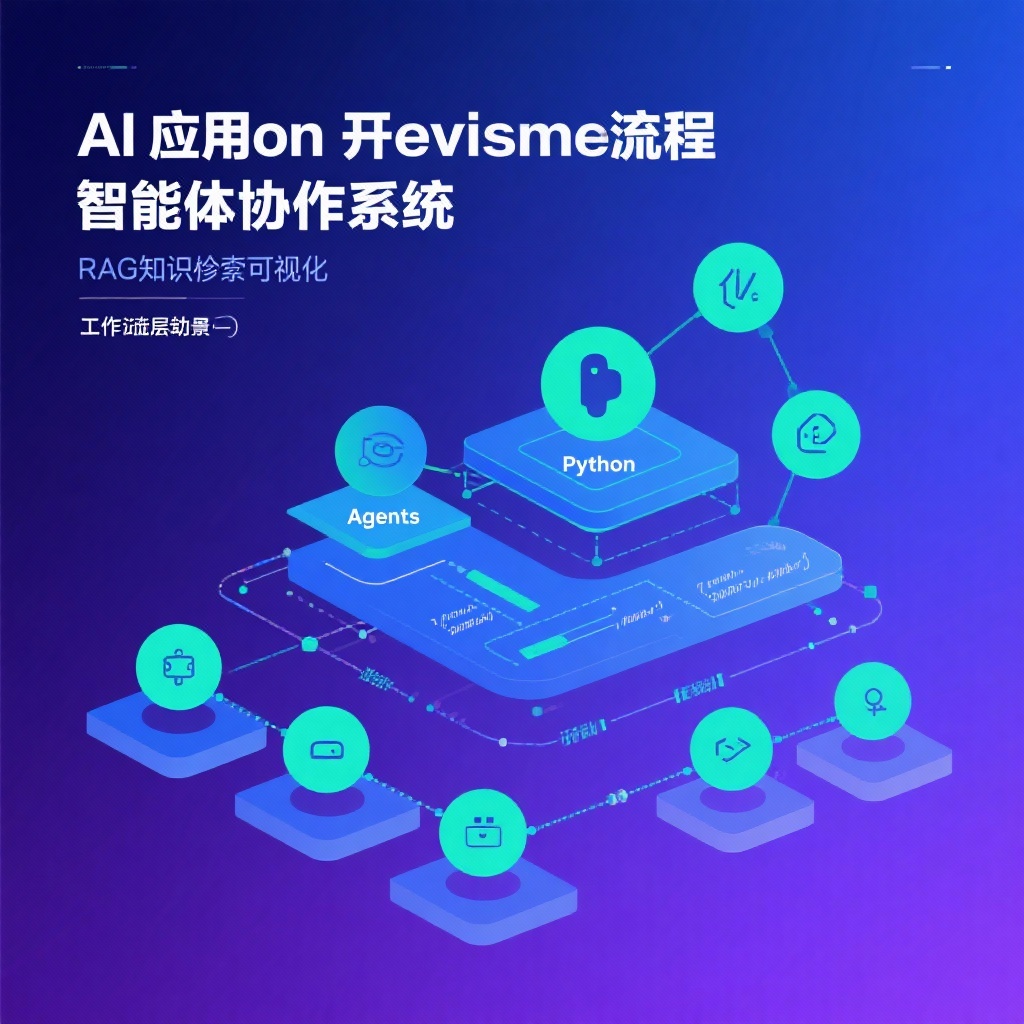
awesome-ai-apps: A Practical Guide to AI Application Development from Theory to Implementation
In the field of AI development, we often face this dilemma: we understand LLM principles and know the basics of frameworks like LangChain, yet still struggle to build complete applications when faced with specific business scenarios. The awesome-ai-apps project was created to solve this problem — it's not another API documentation or theoretical tutorial, but a实战 code repository containing everything from simple chatbots to complex multi-agent systems, covering hot AI application scenarios like RAG, agent collaboration, and workflow automation.
A Systematic Learning Path for AI Applications
What most appeals to me about this project is its structured organization. Unlike typical code collections categorized by framework, awesome-ai-apps uses a dual classification system of "difficulty progression + scenario orientation":
- Starter Agents: Introductory examples for beginners, such as email assistants based on OpenAI SDK and LlamaIndex task managers, with code limited to under 200 lines and detailed comments, ideal for quickly understanding core concepts.
- Simple Agents: Focused on single practical scenarios, like the Finance Agent for stock data tracking and Human-in-the-Loop Agent with human review环节, where each project solves a specific problem with directly reusable code.
- Advanced Agents: Complex workflow examples, such as the Deep Researcher multi-stage research agent (integrating Agno framework and Scrapegraph AI crawler), and Startup Idea Validator (complete workflow including market analysis, competitor research, and feasibility evaluation), demonstrating how to combine multiple AI capability modules into complete solutions.
This structure allows developers of different skill levels to find suitable starting points. As a developer who frequently needs to evaluate different AI frameworks, I particularly appreciate the project's side-by-side comparison of mainstream AI frameworks — for the same weather query functionality, the project provides implementations using PydanticAI, Mastra AI, and AWS Strands Agent, allowing direct visualization of differences in tool definition, state management, and error handling across frameworks.
Code Examples Covering Real Business Scenarios
Another value of the project lies in its selection of scenarios close to actual needs. It doesn't indulge in flashy AI capability demonstrations but focuses on落地 scenarios developers truly need:
- RAG Applications: Beyond common PDF question-answering (PDF RAG Analyzer), it includes engineering scenarios like "Talk to Your DB" (natural language database querying) and "Chat with Code" (intelligent codebase Q&A), solving practical problems like document chunking strategies and vector storage optimization.
- Multi-Agent Collaboration: CrewAI Research Crew demonstrates how to define agents with different roles (researcher, analyst, report writer) and assign tasks, with code containing role description templates, task decomposition logic, and result integration methods — all core elements of team collaboration AI applications.
- Tool Integration: Multiple projects showcase AI integration with external systems, such as Calendar Assistant connecting to Cal.com for schedule automation and Web Automation Agent combining browser tools for web operations — essential capabilities for enterprise-grade AI applications.
Each project includes a complete requirements.txt and environment configuration instructions, with most examples requiring only API key replacement to run, significantly reducing trial-and-error costs. I tested the "Newsletter Generator" project, which crawls specified topic content via Firecrawl and uses LLM to synthesize email newsletters — the entire process requires less than 150 lines of code yet demonstrates a complete pipeline from data acquisition to content generation.
Differentiating Advantages from Similar Projects
GitHub has no shortage of AI-related "awesome" projects, but awesome-ai-apps has two distinct features:
First, it is not a collection of resource links but directly executable code repositories. Many awesome series projects resemble directory indexes, while each entry here is an independently executable application containing specific business logic rather than demonstration code. For example, the document question-answering system in the "MCP Agents" section, based on Model Context Protocol, includes not only core logic but also frontend interfaces and deployment configurations, approaching production-level applications.
Second, the cutting-edge nature of framework coverage. The project includes newer agent frameworks like Google ADK and AWS Strands Agent, which are less common in other example repositories. I noticed the project was created in February 2025 and has maintained active updates, recently adding support for Camel AI and Pydantic AI, indicating the maintainers continuously track AI framework developments.
In contrast, while tutorials focusing on single frameworks (like official LangChain examples) offer sufficient depth, they lack cross-framework comparison; while comprehensive AI resource libraries often lack focus on application implementation. This project perfectly fills the middle ground — demonstrating usage of multiple tools while maintaining depth on specific scenarios.
Considerations in Practical Use
Despite its significant value, several limitations should be noted when using the project:
First, some projects depend on specific platforms. For instance, multiple examples were developed based on Nebius AI Studio — while alternatives are provided, complete platform independence may require additional adaptation. For enterprise users, this could involve vendor lock-in risks requiring evaluation before adoption.
Second, varying complexity levels. The Starter series is beginner-friendly, but Advanced sections (like Deep Researcher) involve multi-framework integration and state management, requiring certain AI application development fundamentals to fully understand. I recommend following the difficulty gradient to avoid frustration from directly challenging complex projects.
Finally, environment consistency issues. Different projects may have conflicting Python and library version dependencies, making separate virtual environments advisable for each project. While the project provides requirements.txt, it doesn't use modern dependency management tools like Poetry or Pipenv, potentially causing version compatibility issues in complex projects.
Who It's For and When to Use It
If you fall into any of these developer categories, this project deserves a place in your bookmarks:
- AI Application Beginners: Quickly master different frameworks through the Starter and Simple series, establishing implementation思路 from 0 to 1.
- Technology Evaluators: When needing to choose among multiple AI frameworks, parallel examples allow直观 comparison of API design, capability boundaries, and applicable scenarios across frameworks.
- Product Implementation Teams: The Advanced series provides reusable business logic modules (multi-agent collaboration, RAG engineering optimization) that can directly serve as foundations for project prototypes.
For me, the project's greatest value lies in providing a "common language for AI application development". By examining implementations across different scenarios, I've discovered common features of excellent AI applications: clear role definitions, reasonable tool integration, and robust error handling — experiences with more long-term value than single-framework usage techniques.
Conclusion
awesome-ai-apps essentially serves as a "practical handbook for AI application development," reducing the barrier from AI theory to practical application through systematic example collections. For developers seeking to enhance AI implementation capabilities, rather than learning scattered information from documents and tutorials, hands-on practice with this project's examples offers greater value — after all, reading tutorials ten times is不如 running a complete project once.
While the project has room for improvement (adding test cases, improving cross-platform adaptation), its strengths far outweigh weaknesses. As an actively updated open-source project, it serves not only as a code repository but also as a real-time record of AI application development best practices. If you're struggling to integrate LLM capabilities into business operations, this project might provide some inspiration.