Apache IoTDB: IoT Time Series Data Storage and Management Solution
Apache IoTDB is an IoT time series data management system optimized for high-frequency writes and time-range queries, addressing traditional database performance bottlenecks. It enables efficient massive data storage via optimized storage structures and compression algorithms, supports concurrent access by millions of devices, offers rich query semantics and big data ecosystem integration. Its tree-structured design aligns with device hierarchies, making data management more business-logical.
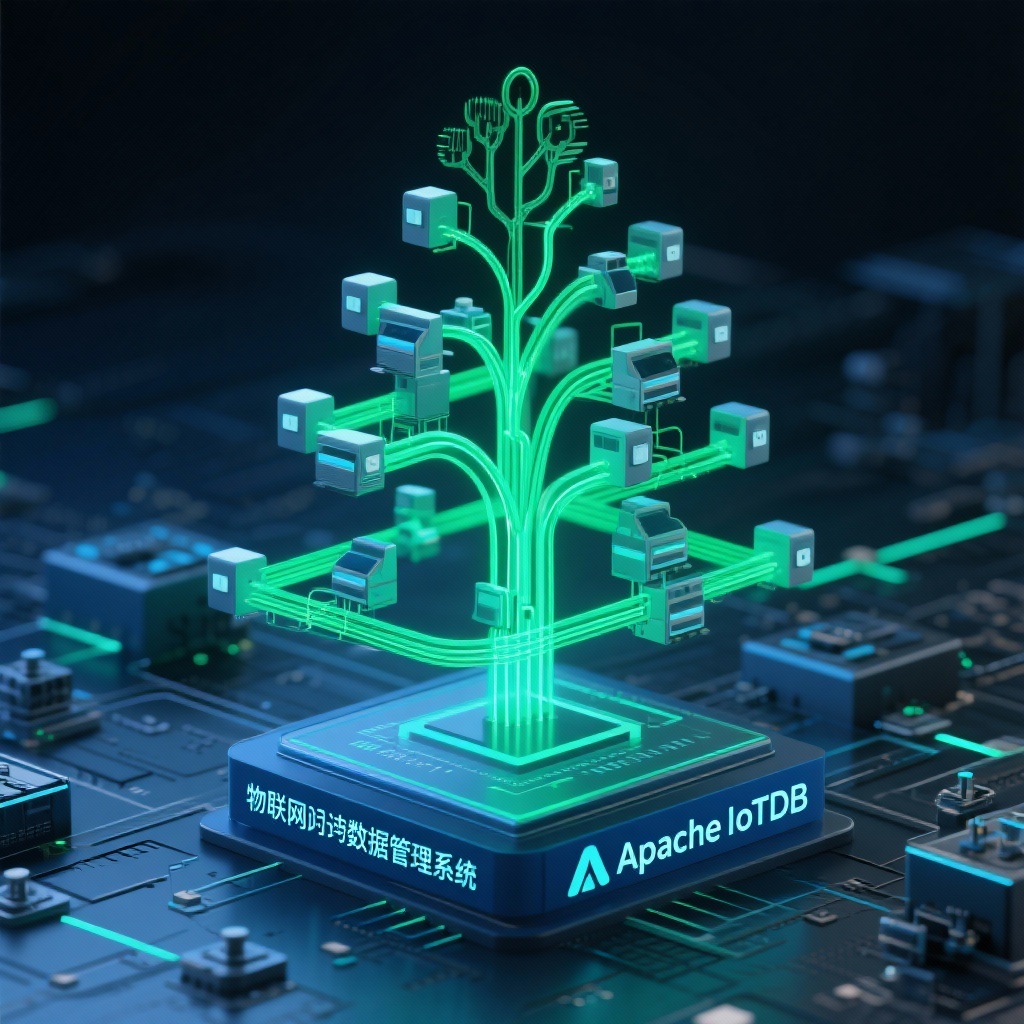
Apache IoTDB: A Lightweight and Efficient Solution for IoT Time Series Data Management
In IoT and industrial monitoring scenarios, we often need to process time series data from hundreds or thousands of sensors. This data typically features high-frequency writes, sequential generation, and time-range queries—challenges that traditional relational databases often struggle to handle in terms of performance and storage requirements. Recently, I researched Apache IoTDB, an open-source project, and discovered its unique advantages in IoT time series data management. Today, I'll share my experience using it.
What Core Problems Does It Solve?
IoTDB (Internet of Things Database) is a management system specifically designed for time series data. Its core goal is to address three major pain points in industrial IoT scenarios: first, efficient storage of massive time series data by optimizing storage structures and compression algorithms to reduce hardware costs; second, high-throughput read and write performance supporting concurrent data ingestion from millions of devices; and finally, convenient analysis of time series data with rich query semantics and integration capabilities with the big data ecosystem.
Unlike general-purpose databases, IoTDB was designed from the ground up with consideration for the hierarchical structure of IoT devices. For example, in a smart factory, devices might be organized in a hierarchy like "factory → workshop → production line → equipment → sensor". IoTDB's directory structure natively supports this tree-like organization, making data management more aligned with actual business logic.
Core Features and Technical Highlights
During practical testing, several features of IoTDB left a deep impression on me. Most notably is its storage efficiency, which relies on the TsFile columnar storage format designed specifically for time series data. Combined with multiple encoding algorithms (such as RLE and Delta encoding) and compression technologies (SNAPPY by default), it can significantly reduce storage costs. Official tests show that for industrial sensor data, the compression ratio typically reaches 10:1 or higher, which is highly valuable for scenarios requiring long-term storage of historical data.
Second is its read and write performance. In a single-machine environment, IoTDB can easily support write throughput of hundreds of thousands or even millions of points per second, with query response times remaining in the millisecond range. This benefits from optimizations tailored to time series data characteristics: writes use append mode to avoid random I/O; queries support efficient filtering by time range and device hierarchy, and can time-align multiple sensor data streams—a common requirement in industrial data analysis, such as comparing the operating status of different devices at the same moment.
Another practical feature is its flexible deployment options. It can be deployed as a distributed cluster on cloud servers, run as a standalone version on edge devices, and even provides data synchronization tools between cloud and edge. This flexibility allows it to adapt to full-scenario requirements from edge to cloud, especially in industrial IoT where many scenarios require data storage on edge devices with unstable networks before synchronization to the cloud.
In terms of ecosystem integration, IoTDB is quite comprehensive. It supports a SQL-like query language (InfluxQL-like syntax), JDBC interface, direct integration with Grafana for visualization, and provides integration interfaces with Hadoop and Spark for convenient offline analysis. For developers familiar with SQL, the learning curve is low, as there's no need to learn an entirely new query language.
Comparison with Similar Products
The time series database field already has several mature products, such as InfluxDB, TimescaleDB, and Prometheus. Compared with these products, IoTDB's differentiated advantages mainly lie in three aspects: first, IoT scenario adaptation with tree-like device hierarchy and device management functions that better meet industrial needs; second, storage efficiency where the TsFile format achieves higher compression ratios than InfluxDB's TSM format in certain scenarios; and third, ecosystem compatibility as an Apache project, offering more natural integration with the Hadoop/Spark ecosystem, making it suitable for scenarios requiring in-depth data analysis.
Of course, compared to Prometheus, which focuses on monitoring and alerting, IoTDB is slightly weaker in real-time alerting capabilities. Compared to InfluxDB, there's still a gap in community size and third-party tool support. However, in the industrial IoT niche, IoTDB's comprehensive performance is worthy of attention.
Practical Experience and Applicable Scenarios
In actual deployment testing, IoTDB was relatively simple to install and configure, providing one-click startup scripts and clear configuration files. Data can be quickly accessed through CLI tools or JDBC drivers, with basic commands similar to SQL, resulting in low learning costs. I attempted to simulate a scenario with 1000 devices reporting data every 10 seconds—the server CPU usage remained stable at around 20%, with memory consumption of approximately 500MB, showing an overall lightweight performance.
Scenarios suitable for IoTDB mainly include: industrial IoT (equipment condition monitoring, predictive maintenance), smart buildings (energy consumption monitoring), environmental monitoring (weather stations, air quality sensor networks), and other fields requiring long-term storage of high-frequency time series data. It's particularly suitable for teams that need to handle massive writes while performing complex historical data analysis.
Advantages and Disadvantages
Objectively speaking, IoTDB's advantages are obvious: a storage engine optimized specifically for time series data brings efficient read/write performance and storage compression; a hierarchical data model that closely matches IoT devices; lightweight design suitable for edge deployment; and Apache endorsement ensuring project stability and long-term maintenance.
Some limitations should also be noted: as a Java-developed database, its resource footprint is slightly higher than InfluxDB, which is implemented in Go; although it supports distributed deployment, the ease of use for cluster management and dynamic scaling still has room for improvement; while community documentation is comprehensive, Chinese materials are relatively scarce, making it less friendly for non-English users.
Is It Worth Using?
If you're working with time series data in IoT or industrial scenarios and facing the following problems, IoTDB is worth trying: needing to reduce long-term storage costs, having more than a thousand devices with high-frequency data writes, or requiring integration with big data platforms for offline analysis. For small-to-medium scale time series data scenarios (such as hundreds of devices), InfluxDB might be more lightweight; but for large-scale industrial deployments, IoTDB's stability and optimization features offer significant advantages.
From a learning perspective, IoTDB has good code quality, especially the storage design of TsFile and time series data compression algorithms, which are worth studying for developers interested in storage engines. If you're building an IoT platform, consider adding it to your technology selection list for practical testing and comparison.
In summary, Apache IoTDB, as a time series database focused on industrial IoT, demonstrates outstanding performance in storage efficiency and IoT adaptability. Although there's still room for improvement in community size and ecosystem maturity, its practical value in specific scenarios is undeniable. With the development of industrial IoT, such vertically optimized time series databases are likely to become the choice of more and more enterprises.