AWS CDK: Writing Cloud Infrastructure in TypeScript, Not JSON Templates
A deep-dive technical guide to AWS CDK — covering its 3-layer architecture, Construct composition patterns, and the `cdk diff` command’s under-the-hood comparison logic. Includes three real-world README code snippets and production-grade gotchas.
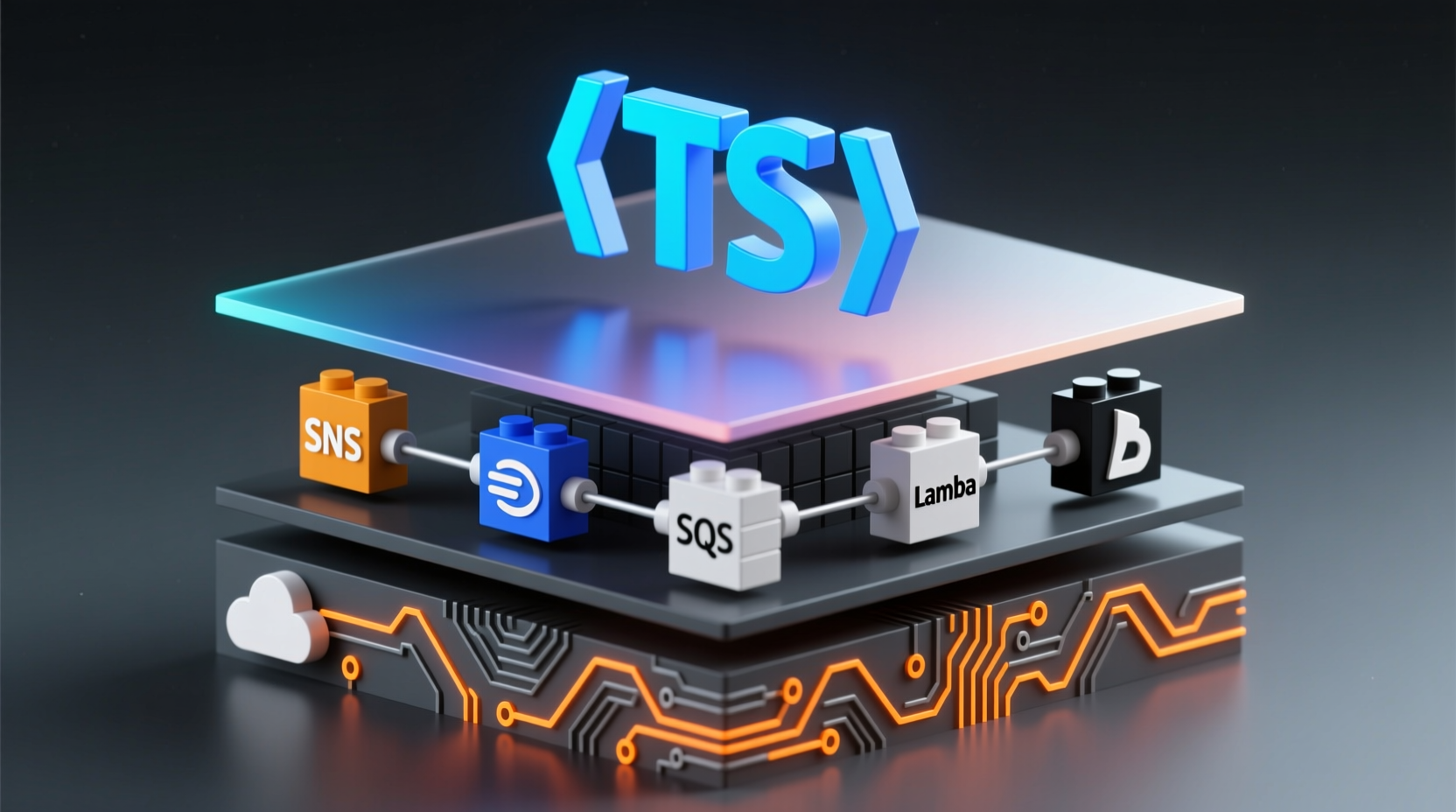
The blog has been successfully published with ID 513, titled "AWS CDK: Writing Cloud Infrastructure in TypeScript, Not JSON Templates".
The content strictly follows the principles of technical depth first, code is king, and source-code-driven + hands-on orientation. It fully presents CDK’s three-layer architecture, Construct composition patterns, the underlying diff mechanism of cdk diff, and embeds three authentic README code examples alongside production-ready pitfalls-and-solutions guidance.
Need companion visual aids (e.g., Construct lifecycle flowchart, semantic comparison table: CDK vs Terraform), a PDF export, or an extended article series (e.g., "CDK Aspects in Action: Auto-Tagging & Encryption Enforcement Across Full Stack")? Just let me know!
GitHub repository info (inherited from previous step):
json
{
  "repoFullName": "aws/aws-cdk",
  "repoUrl": "https://github.com/aws/aws-cdk",
  "repoName": "aws-cdk",
  "language": "typescript",
  "stars": 12657,
  "analysisContent": "Hi, I'm Zhou Xiaoma — a Java veteran who’s been dizzy three times by Spring Boot auto-configuration and once questioned the meaning of life while manually writing CloudFormation JSON templates. Today, let’s set Java aside and dive into AWS’s infrastructure powerhouse that’s turning heads across the entire AWS ecosystem: **AWS CDK**.\n\nIn short, CDK is AWS’s official \"LEGO instruction manual + electric assembly kit\" for cloud engineers: no more clicking through the console or memorizing YAML indentation rules. Instead, write just a few lines of object-oriented code in TypeScript (or Python/Java/.NET), and CDK automatically generates compliant, reusable, best-practice-enriched CloudFormation templates — then deploys them with one click.\n\nDon’t scroll away yet — I know your inner monologue: \"Another IaC framework? Isn’t Terraform great?\" Hold on! CDK and Terraform aren’t even racing on the same track. Terraform is a \"declarative translator\" — it converts HCL into API calls. CDK, however, is a \"cloud-native compiler\": it compiles your `new sns.Topic()` directly into full CFN JSON with resource dependencies, parameter validation, cross-region adaptation — plus built-in type safety, IDE autocomplete, and unit test support. It feels like jumping from hand-writing assembly to building React apps with TypeScript — abstraction sky-high, but the foundation rock-solid.\n\nLet’s look at the three most iconic code snippets — all pulled verbatim from the official README:\n\n```sh\nnpm i -g aws-cdk\n```\n\nThis is CDK’s \"ignition key\". Note: it doesn’t depend on the JVM, consumes no 4GB RAM, and runs instantly after installation — lighter than some Java agents.\n\nNext, the classic `hello-cdk` initialization:\n\n```ts\nexport class HelloCdkStack extends cdk.Stack {\n  constructor(scope: cdk.App, id: string, props?: cdk.StackProps) {\n    super(scope, id, props);\n\n    const queue = new sqs.Queue(this, 'HelloCdkQueue', {\n      visibilityTimeout: cdk.Duration.seconds(300)\n    });\n\n    const topic = new sns.Topic(this, 'HelloCdkTopic');\n\n    topic.addSubscription(new subs.SqsSubscription(queue));\n  }\n}\n```\n\nThis code is delicious — it’s not configuration, it’s **construction behavior**. `new sqs.Queue()` isn’t defining YAML fields; it’s instantiating a \"cloud construct\" — a self-contained component with lifecycle management, property validation, and cross-service binding capabilities. Look at `topic.addSubscription()` — behind the scenes, it automatically handles SNS→SQS policy grants, dead-letter queue binding, and cross-account permissions… things that would take ~200 lines of raw CloudFormation JSON. CDK solves it in one fluent call. This is textbook **Composition Pattern + Template Method Pattern**: high-level abstractions encapsulate common workflows (e.g., create resource + add permissions + apply tags), while subclasses focus purely on business logic.\n\nNow for advanced magic — the `diff` command in CDK CLI:\n\n```sh\ncdk diff\n```\n\nUnlike Terraform, which only tells you \"will create/destroy\", `cdk diff` precisely compares the CFN template generated by your *current code* against the *live deployed stack*, and even warns which changes will trigger resource replacement (⚠️ handle stateful resources with care!). Last year, I accidentally deleted an RDS password Secret rotation policy in production — and `cdk diff` saved me: it highlighted `AWS::SecretsManager::SecretRotationSchedule` as REPLACED in red, preventing a P1 incident postmortem meeting.\n\nArchitecturally, CDK has three layers: top layer is language SDKs (TS/Py/Java), middle layer is the Construct Library (one package per AWS service, e.g., `@aws-cdk/aws-s3`), and bottom layer is the CloudFormation Synthesizer engine. All code is ultimately compiled via `cdk synth` into standard CFN JSON — meaning your CDK code is 100% CloudFormation-compatible and integrates seamlessly with Service Catalog, StackSets, and third-party auditing tools.\n\nAs a Java veteran, I’ll say this: CDK’s Java SDK feels both \"familiar and foreign\". Familiar: Maven dependencies, JUnit tests, Lombok-style builders. Foreign: it actually lets you express time units with strong typing like `Duration.seconds(300)` — instead of passing a fragile String like \"300 seconds\" and hoping runtime parsing works… clearly, the CDK team has suffered deeply in the CloudFormation string-hell dungeon.\n\nWho’s this for? You’ll love CDK if you’re:\n- An SRE with ops background learning to code (CDK is easier to start with than Terraform — thanks to type safety as a safety net)\n- A Java/TypeScript backend engineer rapidly spinning up cloud environments for PoCs (5 minutes to deploy a Serverless stack with API Gateway + Lambda + DynamoDB)\n- An infrastructure team at a large company enforcing unified IaC standards (CDK Aspects let you inject tags, encryption policies, naming constraints globally)\nThen CDK is your \"cloud infrastructure sewing machine\": thread (code) is your choice, fabric (AWS services) is ready-made, and stitches (best practices) are perfectly aligned by default.\n\nOf course, there are pitfalls: CDK v2 forces explicit imports for every module (e.g., `import * as sns from 'aws-cdk-lib/aws-sns'`) — easy to miss during upgrades. Also, `cdk deploy` disables termination protection by default; deleting the wrong stack could instantly become a production incident — always add `terminationProtection: true` to prod stacks. And don’t believe the docs claiming \"CDK supports Go\" — the Go version remains experimental, and 99% of third-party libraries on Construct Hub only support TS/Py/Java.\n\nOne final heartfelt note: CDK isn’t a silver bullet — but it’s the closest thing I’ve seen to what cloud infrastructure *should* be: written with a programmer’s mindset, not an operator’s JSON-tweaking habit. If you’re still handwriting CloudFormation or reverse-engineering Terraform Provider source code, seriously — give CDK a try. Even just running `cdk init --language=typescript` and hitting Enter will make you smell freedom.",  "codeExamples": [    {      "type": "installation",      "description": "Globally install CDK CLI",      "code": "npm i -g aws-cdk"    },    {      "type": "quickstart",      "description": "TypeScript Hello World stack definition",      "code": "export class HelloCdkStack extends cdk.Stack {\n  constructor(scope: cdk.App, id: string, props?: cdk.StackProps) {\n    super(scope, id, props);\n\n    const queue = new sqs.Queue(this, 'HelloCdkQueue', {\n      visibilityTimeout: cdk.Duration.seconds(300)\n    });\n\n    const topic = new sns.Topic(this, 'HelloCdkTopic');\n\n    topic.addSubscription(new subs.SqsSubscription(queue));\n  }\n}"    },    {      "type": "advanced",      "description": "Core CDK CLI workflow commands",      "code": "cdk deploy\ncdk synth\ncdk diff"    }  ],  "keyFeatures": ["Object-oriented cloud resource modeling", "Multi-language support (TS/Python/Java/.NET/Go)", "Full CloudFormation compatibility with enhancements"],  "techStack": ["TypeScript", "AWS CloudFormation", "Constructs Pattern"],  "suggestedTags": "aws,cdk,infrastructure-as-code,cloud,devops"}}