Julep: Python Platform for Serverless AI Agent Workflows
Julep, an open-source Python serverless AI workflow platform billed as 'Firebase for AI agents,' solves infrastructure/workflow management pain points in complex AI agent development. Offering core features like persistent memory, it lets developers focus on AI logic without server/scale concerns, with 6k+ GitHub stars.
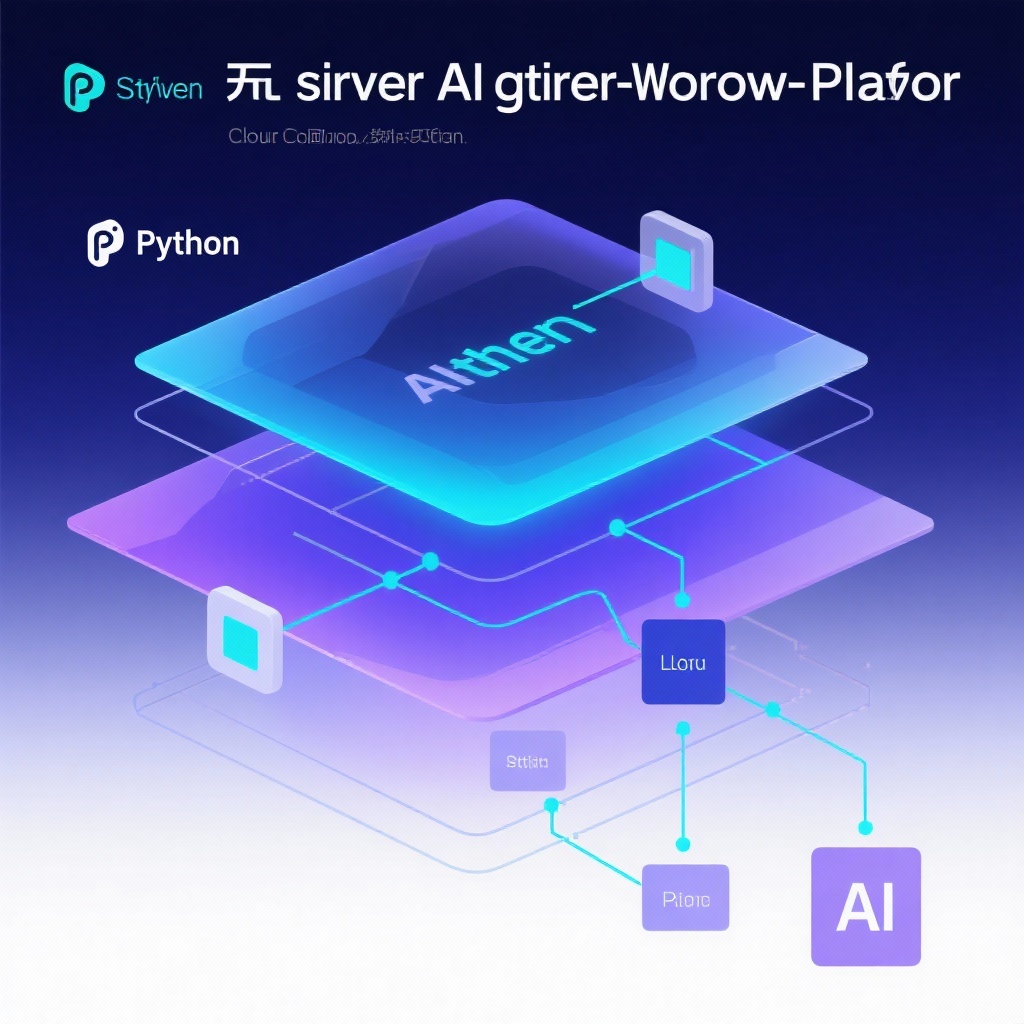
Julep: The Serverless Workflow Platform Simplifying AI Agent Development
As developers who frequently build AI applications, we all know the pain point: when needing to upgrade from simple prompt calls to complex AI agents, infrastructure and workflow management become extremely cumbersome. The recently discovered Julep project might just be the solution to this problem.
What is Julep?
Simply put, Julep is an open-source serverless AI workflow platform positioned as "Firebase for AI agents." It allows developers to focus on AI logic itself without worrying about infrastructure, state management, and scaling issues. Since its release in April 2024, the project has accumulated over 6k stars, indicating a genuine community need for this type of tool.
Core Problems Solved
When building complex AI applications, we typically face these challenges:
- How to enable AI agents to remember long-term conversation history beyond single interactions
- How to design complex workflows with conditional branches and loops
- How to integrate external tools and APIs while handling exceptions like call failures
- How to make workflows run reliably and scale automatically without managing servers
Julep provides an all-in-one solution specifically addressing these issues.
Notable Core Features
1. Persistent Memory System
This is one of the most practical features in my opinion. Traditional AI conversation systems are often limited by context window size, while Julep offers cross-session persistent memory. Developers can define memory retention policies, enabling AI agents to truly "remember" user preferences and historical interactions—critical for building personalized assistants.
2. Modular Workflow Orchestration
Julep allows defining workflow steps using YAML or code, supporting conditional logic, loops, and parallel execution. For example, you could design a workflow that first checks if a user question requires tool calls, and if so, simultaneously invokes search and database queries before integrating the results to generate a response. This flexibility makes complex task automation possible.
3. Seamless Tool Integration
The platform includes a built-in tool calling framework that easily integrates external APIs, databases, web search, and other capabilities. More importantly, it handles tool call retry logic, error handling, and result parsing, reducing significant boilerplate code.
4. Serverless Architecture
As developers, we don't need to worry about servers, containers, or scaling strategies. Julep automatically handles workflow scheduling, execution, and scaling, dramatically reducing operational overhead—especially beneficial for small teams or individual developers.
Technical Implementation Highlights
Julep's design思路 is clear: abstract the complex parts of AI workflows into platform capabilities. It employs a modular architecture with core components including a workflow engine, memory management system, tool calling layer, and executor. Particularly noteworthy is its state management mechanism, which reliably tracks long-running workflow states and enables recovery even in case of system failures.
Compared to similar tools, Julep is more focused on AI agent scenarios. Unlike visual workflow tools like LangFlow, it emphasizes backend infrastructure; compared to general workflow engines like Airflow, it offers deep optimizations for AI scenarios—especially in memory management and LLM integration.
Practical Use Cases and Experience
According to documentation and examples, Julep suits these scenarios:
- Building intelligent assistants requiring long-term memory (e.g., customer support, personal assistants)
- Automating multi-step data processing tasks (e.g., market analysis, research summarization)
- Developing complex AI agents needing multiple tool calls (e.g., travel planning, code assistants)
The onboarding experience is smooth, with Python and Node.js SDKs available to define a simple agent in just a few lines of code. The official cookbook provides numerous examples ranging from basic conversations to tool calling, reducing the learning curve.
Objective Evaluation: Advantages and Limitations
Advantages
- Focused on solving core pain points in AI agent development with precise positioning
- Serverless architecture significantly reduces operational costs
- Memory system and workflow engine designs align with practical needs
- Open-source and free, supporting both self-hosting and managed service options
Limitations
- Relatively new project (created April 2024) with ecosystem and community support still growing
- Some advanced features may lack stability, and while documentation is comprehensive, it could benefit from more depth
- As a serverless platform, performance under extreme loads still needs time to validate
Worth Trying?
Julep is worth considering if:
- You're building AI agent applications requiring complex logic
- You don't want to invest effort in managing infrastructure and workflow scheduling
- You need persistent memory and tool integration capabilities
For simple prompt calling scenarios, Julep might be overkill. But if you need to build real AI applications rather than demo prototypes, it can save you significant time.
Conclusion
Julep provides a valuable solution for AI agent development, with particularly impressive designs in serverless architecture and persistent memory. As a relatively new project, it still has room to grow, but its core思路 and implementation already demonstrate potential. If you're tired of building AI workflow infrastructure from scratch, give Julep a try—it might just be the "AI agent backend" you've been needing.