No More Port Numbers! Vercel Labs' Portless Saves This Veteran Backend Dev from Years of Port Conflict Hell
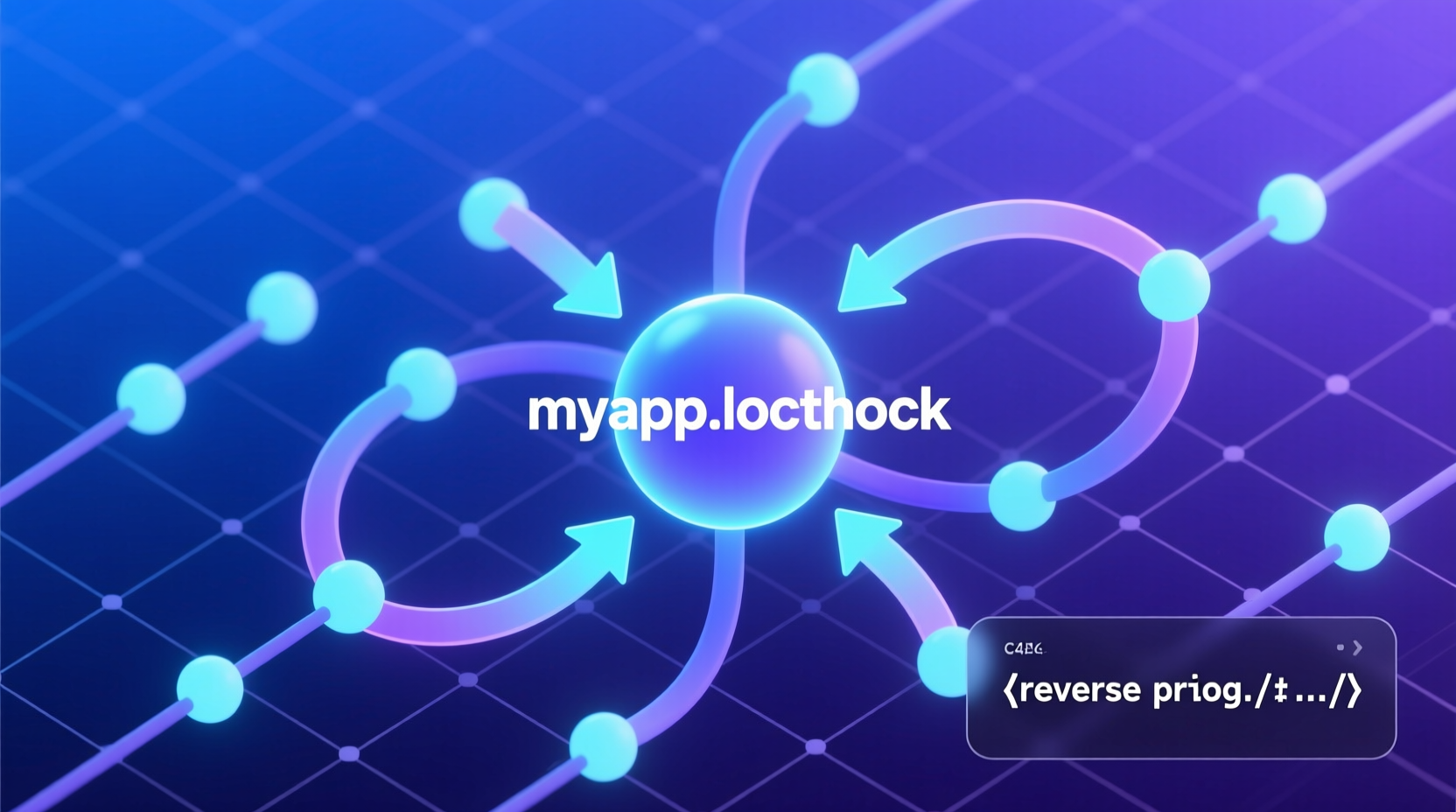
Portless replaces port numbers with stable named URLs (myapp.localhost), featuring reverse proxy architecture, automatic framework adaptation, HTTP/2 optimization, and Git Worktrees integration. Perfect for microservices and multi-project development.
No More Port Numbers! Vercel Labs' Portless Saves This Veteran Backend Dev from Years of Port Conflict Hell
Hey everyone, I'm Zhou Xiaoma. As a backend developer who's been wrestling with port numbers for nearly a decade, I have mixed feelings about this tool's birth—why didn't it appear five years ago when I was tearing my hair out over port conflicts?
Today we're diving into Portless, launched by Vercel Labs. It solves a seemingly simple but actually painful problem: Stop making people remember those messy port numbers.
What Problem Does This Thing Actually Solve?
Think about your usual development scenario: Your frontend starts a React project occupying port 3000. You try to launch the Next.js dev server, but get a port conflict error. You change Next.js to 3001, only to find the backend API waiting on 3001. Switch to 3002, and suddenly the Redis client grabs that port...
Eventually, you open ~/.zshrc or ~/.bashrc, staring at a bunch of password-like aliases:
bash
alias be1="cd /app/backend1 && npx vite --port 5123"
alias fe2="cd /app/frontend2 && npm run dev -- --port 8081"
alias doc="cd /app/docs && pnpm docs:dev -- --port 3005"
Honestly, it's a miracle someone with my memory has survived this long. And every time I get a new computer, this whole setup needs to be redone.
Portless has a clever approach: Since port numbers are random, give them meaningful names. Your app no longer binds to localhost:3000, but to https://myapp.localhost. The name stays fixed while the underlying port gets auto-assigned.
What's this like? It's like memorizing friends' phone numbers in the past versus now just remembering "Old Zhang" and letting your contacts handle the routing. Plus, this routing layer brings extra surprises.
Technical Architecture: A Reverse Proxy Done Right
Architecturally, Portless cores around a reverse proxy server listening on port 80 or 443, forwarding requests to different backend apps based on hostname. Nothing groundbreaking here, but the implementation details are brilliant.
First, port allocation. Most frameworks support specifying ports via PORT environment variables. Portless auto-assigns free ports in the 4000-4999 range through PORT injection. For stubborn frameworks (Vite, VitePlus, Astro, React Router, Angular, Expo, React Native), it smartly injects corresponding CLI arguments like --port and --host. This compatibility handling is way more reliable than my custom scripts.
Then there's automatic proxy startup. When running portless myapp next dev, if the proxy isn't running, it auto-starts. After reboots, it restores previous configurations (ports, TLS settings, domain suffixes) without resetting to defaults—a welcome elimination of confusion.
Framework support is comprehensive: Next.js, Express, Nuxt, Vite—you name it. The Git Worktrees integration particularly impressed me: In the main branch worktree, apps access https://myapp.localhost; in the fix-ui branch worktree, it becomes https://fix-ui.myapp.localhost. This thoughtful design eliminates port conflicts during parallel branch development.
Code实战:Installation and Usage
Let me walk you through practical usage.
Installation Methods
bash
 # Global installation (recommended for version consistency)
 npm install -g portless

## Or as project dev dependency (watch for version differences across developers)
 npm install -D portless
(Note: Portless is pre-1.0, config formats may change between versions. Project installations may require re-running portless trust)
Quick Start: Simplest Usage
bash
 # Name the app and start it
 portless myapp next dev
 # Auto-routes to -> https://myapp.localhost
HTTPS+HTTP/2 enables by default. On first run, it generates a local Certificate Authority (CA) and adds it to system trust stores. macOS/Linux require password authorization for port 443 binding. Use --no-tls for plain HTTP if needed.
Using in package.json
json
 {
  "scripts": {
    "dev": "portless run next dev",
    "dev:api": "portless api.myapp pnpm start",
    "dev:docs": "portless docs.myapp next dev",
    "dev:lan": "portless proxy start --lan",
    "proxy:start": "portless proxy start --foreground --tld test",
    "proxy:stop": "portless proxy stop",
    "test": "NEXT_TELEMETRY_DISABLED=1 vitest --coverage",
    "lint": "eslint --cache .",
    "type-check": "tsc --build --noEmit",
    "format": "prettier --write ."
  }
}
Subdomain Usage for Microservices
bash
## Start API microservice, access -> https://api.myapp.localhost
portless api.myapp pnpm start

## Start docs project, access -> https://docs.myapp.localhost
portless docs.myapp next dev
By default, only registered subdomains route (strict mode). For wildcard routing (e.g., tenant systems: tenant1.myapp.localhost), add --wildcard when starting the proxy.
Custom Domain Suffixes
While .localhost resolves to 127.0.0.1 in most browsers, use other suffixes like:
bash
## Start proxy with `.test` suffix (official recommendation, no conflicts)
portless proxy start --tld test
portless myapp next dev
## -> https://myapp.test
Strongly recommend .test over .local (conflicts with mDNS/Bonjour) or .dev (Google-owned, forces HTTPS).
Microservice Proxy Configuration
When proxying API requests to another Portless app, rewrite Host headers to avoid loops:
ts
// Vite configuration vite.config.ts
export default {
  server: {
    proxy: {
      "/api": {
        target: "https://api.myapp.localhost",
        changeOrigin: true,
        ws: true
      }
    }
  }
}
Next.js configuration is simpler:
js
// next.config.js
module.exports = {
  allowedDevOrigins: ["myapp.local", "*.myapp.local"]
}
Design Patterns and Performance Optimization
From a design pattern perspective, Portless uses: Proxy Pattern (listening on 80/443, forwarding to apps), Factory Pattern (auto-generating framework start commands), Observer Pattern (detecting port/network changes).
Performance-wise, HTTP/2 implementation shines: Traditional HTTP/1.1 limits 6 concurrent connections per domain, bottlenecking modern frontend frameworks (especially unbundled servers like Vite). With HTTP/2, all requests reuse a single connection for theoretically better performance.
Who Should Use This? Ideal Scenarios
This project excels for:
- Frontend Developers: Running multiple projects simultaneously (main site + admin + docs)
- Microservices Teams: Managing chaotic port allocations across services
- AI Agent Developers: Needing stable, predictable local access
- Git Worktrees Power Users: Parallel branch development without port conflicts
Adoption is nearly effortless ("install-and-run"), but watch for these gotchas:
- First Run Requires sudo: Binding port 443 needs admin privileges on macOS/Linux
- Safari May Need Manual Setup: While Chrome/Firefox/Edge auto-resolve
.localhost, Safari relies on system DNS (runportless hosts sync) - Project Installations Require Version Control: Different developer versions may alter state directory formats (re-run
portless trust) - LAN Mode Needs Extra Dependencies: Install
avahi-utilson Linux
A Veteran Backend Dev's Honest Take
Honestly, I had complex feelings seeing this project. As a backend dev who's configured Tomcat ports since ancient times, I'm used to modifying <Connector port="8080"> in server.xml. But this "naming over port numbers" philosophy truly fits modern DX.
Especially in microservices architectures where every service has its own port—constantly checking docs to debug which service lives on which port—I've had enough. Portless shows a better way: Infrastructure should serve humans, not vice versa.
This isn't just theoretical. Details are polished: Non-interactive environments (CI/TTY-less) exit cleanly with clear errors; auto-injects NODE_EXTRA_CA_CERTS for Node.js CA trust; detects and warns about infinite proxy loops.
If I were planning a new microservice project today, I'd seriously consider Portless in the toolchain. Especially with Docker: Register static routes via portless alias <name> <port> for containerized service access by name.
While still 0.x (use cautiously in production), it's remarkably mature as a dev tool. Backed by Vercel Labs, future maintenance looks secure.
Overall, this is a "small but beautiful" project: Solves a real pain point cleanly with professional details. 7k+ stars prove its popularity. I'd rate it 8.5/10—deducting 1.5 for pre-1.0 status and unverified Windows experience.
Final word: Still memorizing port numbers? Try Portless. Trust me, you won't go back.