ChatLab: The Architectural Secrets of Local AI Chat Analysis
A Java veteran's deep dive into ChatLab's 3-tier Electron architecture, streaming data pipeline, and AI Agent design that makes local-first chat analysis both privacy-preserving and insightful.
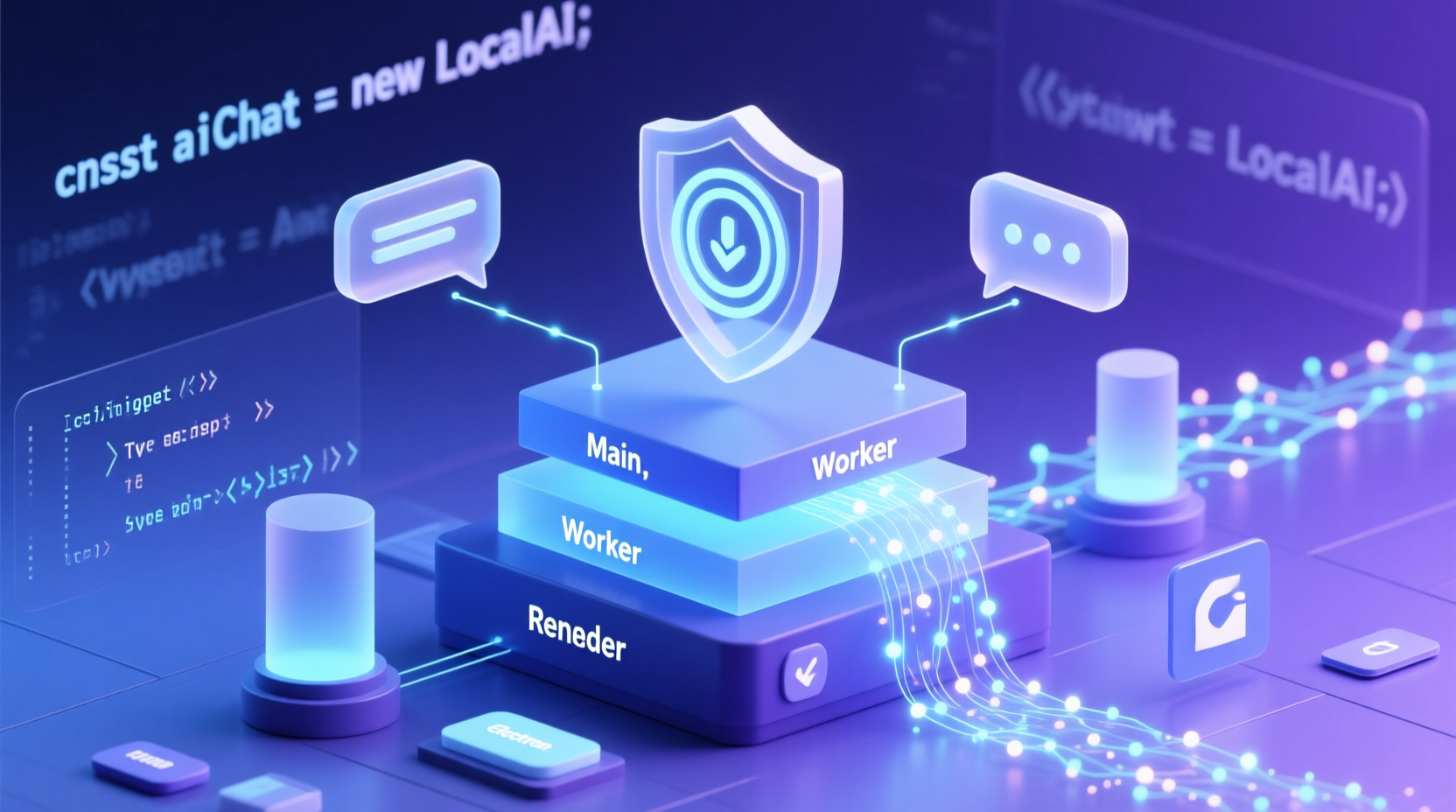
ChatLab: When Your Chat History Meets Local AI – Privacy and Insights, I Want Both!
As a Java veteran who's been tortured by the Spring ecosystem for years, seeing such an elegantly designed chat history analysis project makes me感慨: the frontend ecosystem is getting increasingly competitive. Today, let's talk about ChatLab, which just hit the trending list today, and see what makes it stand out even with 5,575 stars.
What Problem Does This Project Actually Solve?
Honestly, who hasn't wanted to dig through their chat history with someone to see what you've talked about over the years? But here's the thing – WeChat, QQ, WhatsApp, and other platforms all have wildly different export formats. Trying to do unified analysis is like finding a universal connector for LEGO blocks from different countries – theoretically possible, but practically a headache.
ChatLab's clever move? Instead of trying to unify all platform interfaces, it created a standardized format specification (ChatLab Format) that maps different platforms' chat histories to a unified data model. Think of it as building a translation layer so all the "dialects" can communicate in "Mandarin."
Even more importantly, it takes privacy protection to the extreme. All data processing happens locally – no need to upload chat histories to the cloud. In an era of frequent data breaches, this design philosophy is like a breath of fresh air.
Technical Architecture: Three-Tier Separation, Each Doing Its Job
Let me, an old backend developer, break down its architecture design. You'll find this thing is clearer than many Java microservices architectures.
1. Main Process (Control Plane)
This is the "brain" of the entire application, responsible for lifecycle management and window control. Code is mainly distributed in electron/main/index.ts, with inter-process communication (IPC) defined within domains via electron/main/ipc/. AI services and localization services are integrated here as well.
2. Worker Layer (Compute Plane)
This is the real "grunt work" layer. Compute-intensive tasks like import, indexing, and querying are all offloaded to electron/main/worker/ and scheduled through workerManager. The benefit is obvious – the UI won't freeze. Imagine importing a million chat messages and the interface just locks up – how terrible would that user experience be?
3. Renderer Layer (Interaction Plane)
A Vue 3 + Nuxt UI + Tailwind CSS combination handles all user interfaces. It exposes strictly limited APIs through electron/preload/index.ts to ensure process boundary security.
Data Pipeline: The Wisdom of Streaming Processing
Here's a design detail that deserves special praise – streaming parsing instead of buffering. The traditional approach might be to read the entire chat history file into memory before processing, but ChatLab chooses to parse as it reads. It's like eating – do you choose to eat bite by bite, or stuff the whole plate in your mouth first and then chew?
The data flow looks like this:
Import → Persistence → Indexing → Query & Analysis → Visualization- Ingestion: The
parser/module detects file format and dispatches to corresponding parsers - Persistence: Stream writes core entities (conversations, members, messages)
- Indexing: Builds conversation and time-oriented indexes for timeline navigation
- Query & Analysis:
worker/query/*provides activity metrics, interaction analysis, SQL lab, and more - Presentation: The rendering layer converts query results into charts, rankings, timelines, and other visual forms
Installation & Quick Start
As a developer, the most important thing is obviously how to get this thing running. Good news – the barrier to entry is surprisingly low:
bash
## Install dependencies (requires Node.js >= 20 and pnpm)
pnpm install

## Run Electron app in development mode
pnpm dev
If you encounter exceptions when Electron starts, the official team has thoughtfully prepared a fix:
bash
npm install electron-fix -g
electron-fix start
That's it? As a Java developer accustomed to configuring various XML, YAML, and properties files, I'm actually a bit unaccustomed to this simplicity.
Core Features Deep Dive
1. Extensible Parser Architecture
Adding support for new chat platforms mainly means extending parser/formats/* without touching downstream query logic. This plugin-based design gives the project strong evolvability. Think about it – if you need to support DingTalk or WeChat Work someday, just add a parser without touching core code.
2. Full + Incremental Import Paths
streamImport.ts and incrementalImport.ts support initial import and subsequent updates respectively. This means you can regularly sync new chat histories without starting from zero each time. This design is very friendly for continuous usage scenarios.
3. Modular IPC Boundaries
Domain-based IPC segmentation reduces cross-layer coupling and limits permission sprawl. This design philosophy is similar to the "bounded context" concept in microservices – both aim to make the system more modular and secure.
4. AI Agent + Function Calling
This might be the most eye-catching part for me. Instead of hardcoding AI functionality to a fixed model path, it combines them through Agent + Tool Calling. This means:
- You can search chat history first, then let AI summarize
- AI can generate analysis suggestions based on context
- You can customize the tool functions AI can call
This design makes AI truly an "intelligent assistant that can operate on data" rather than a decorative vase that only chats.
Advantages Compared to Similar Projects
There are quite a few chat history analysis tools on the market, but ChatLab has several obvious differentiating advantages:
- True Localization: Many tools claim to be "secure" but actually require uploading data to the cloud. ChatLab truly keeps data on-device.
- Cross-Platform Support: Currently supports WhatsApp, LINE, WeChat, QQ, Discord, Instagram, Telegram, with future support for iMessage, Messenger, KakaoTalk.
- Unified Data Model: Chat histories from different platforms are mapped to the same model, allowing analysis logic to be reused.
- AI-Driven Deep Analysis: Not just statistical charts – AI can help you discover hidden patterns and insights.
Potential Issues and Considerations
Of course, this project isn't perfect. Based on my experience, the following aspects may need attention:
- Electron App Performance Overhead: Although the Worker layer is used for optimization, Electron's memory footprint is still an issue. It might be challenging for lower-spec devices.
- Parser Maintenance Cost: Export formats from various chat platforms may change, requiring continuous parser maintenance and updates.
- AI Functionality Local Deployment: If running completely locally, hardware requirements will be high; if using cloud APIs, privacy trade-offs come into play.
- Community Contribution Guidelines: The project clearly requires new features to be discussed via Issue first – direct PRs will be closed. For developers wanting to contribute code, this adds an extra communication step.
My Take as an 8-Year Veteran
Honestly, this project showed me another possibility for the frontend ecosystem. In the past, we always thought data analysis and privacy protection were backend jobs, but ChatLab proves that Local-first architecture can absolutely handle these tasks.
If I were to use this project, I'd consider these scenarios:
- Nostalgia Analysis: Regularly import chat histories and let AI summarize how interaction patterns with friends/family have changed.
- Team Collaboration Retrospective: Import project group chat histories to analyze discussion hotspots and decision-making processes.
- Data Insight Experiments: Explore how to use similar technical architecture to handle other types of local data.
Worth deep learning? My answer is absolutely yes. Not because its functionality is so powerful, but because it demonstrates a system architecture philosophy of privacy-first, streaming processing, and modular design. These concepts apply to any tech stack.
One last thing – as a developer accustomed to writing Java, seeing such an elegantly crafted desktop application in TypeScript makes me want to switch careers (just kidding, my Spring ecosystem still can't live without me).
Overall, ChatLab is a project with solid technology, advanced concepts, and high practical value. If you're interested in your social memories, or want to learn Local-first architecture design thinking, this project is definitely worth a try.