Label Studio Annotation Tool: Multi-Type Data Labeling Guide for ML Training Data
Label Studio annotation tool simplifies multi-type data labeling for machine learning training data preparation in 2025. This open source labeling tool streamlines image, text, and video annotation, reducing time and resource strain in ML pipelines. Discover how to optimize training data quality and accelerate model development with this all-in-one solution.
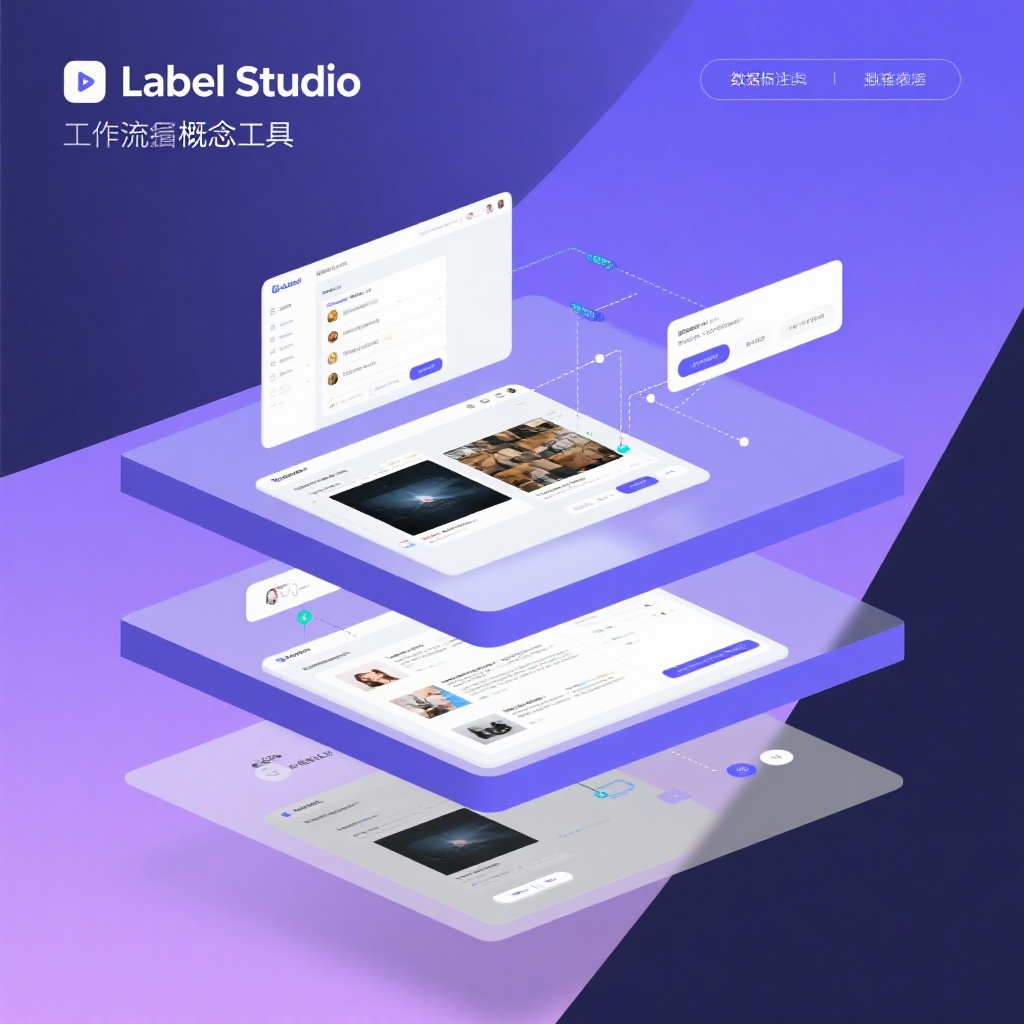
Label Studio: The Complete Open Source Data Labeling Tool for Machine Learning in 2025
In the rapidly evolving landscape of machine learning, high-quality labeled data remains the foundation of successful models. As ML practitioners know all too well, the process of preparing training data can be time-consuming, resource-intensive, and often becomes a bottleneck in the development pipeline. This is where label studio data labeling emerges as a game-changer. Developed by HumanSignal, Label Studio has established itself as the leading open source labeling tool with over 24,700 GitHub stars and a thriving community. In this comprehensive guide, we'll explore how Label Studio has evolved to become the ultimate label studio annotation tool for modern machine learning workflows in 2025.
Why Label Studio Stands Out in 2025
In a market flooded with both commercial and open-source data labeling solutions, Label Studio has maintained its position as the tool of choice for data scientists, ML engineers, and researchers. What sets this open source labeling tool apart from alternatives like LabelImg, VGG Image Annotator, or even commercial platforms?
First and foremost, Label Studio's versatility is unmatched. Unlike single-purpose tools that specialize in just image labeling or text annotation, Label Studio provides a unified platform for annotating virtually any data type you might encounter in ML projects. This eliminates the need to switch between multiple tools for different data modalities, significantly streamlining the training data preparation process.
The tool's active development community ensures continuous improvement and adaptation to emerging needs. With regular updates and contributions from over 3000 forks, Label Studio has evolved far beyond its initial 2019 release to address the complex labeling challenges of 2025's machine learning landscape.
Another key advantage is its seamless integration with machine learning models. Label Studio isn't just a passive labeling tool—it's designed to work alongside your ML pipeline, supporting pre-labeling, active learning, and model-in-the-loop workflows that dramatically reduce manual labeling efforts.
Supported Data Types and Annotation Scenarios
Label Studio's comprehensive support for diverse data types makes it an indispensable tool for modern ML teams handling multi-modal datasets:
Image Labeling Capabilities
As an image labeling tool, Label Studio offers industry-standard annotation features including bounding boxes, polygons, keypoints, semantic segmentation masks, and classification. The intuitive interface supports keyboard shortcuts for efficient labeling, and the review dashboard makes quality control straightforward for large annotation projects.
Text Annotation Excellence
For NLP tasks, Label Studio shines as a text annotation tool with support for named entity recognition, relation extraction, text classification, sentiment analysis, and even complex NLP tasks like coreference resolution. The tool handles plain text, PDF documents, and HTML content equally well.
Audio and Video Labeling
Beyond images and text, Label Studio serves as a powerful audio annotation tool for speech recognition, speaker diarization, and sound classification projects. The audio waveform visualization with precise timestamp controls simplifies annotating speech segments and identifying acoustic events.
As video labeling software, it provides frame-level annotation capabilities for action recognition, object tracking, and event detection. The timeline interface allows annotators to mark events with millisecond precision across video sequences.
Specialized Data Types
Label Studio also supports time-series data annotation for sensor data, IoT applications, and financial forecasting; medical imaging formats for healthcare ML projects; and even custom data types through its extensible architecture.
Getting Started: Label Studio Setup Guide
Getting started with Label Studio is straightforward, with multiple installation options to suit different environments:
Docker Installation (Recommended for Production)
The simplest way to deploy Label Studio is through Docker:
bash
docker pull heartexlabs/label-studio:latest
docker run -it -p 8080:8080 -v $(pwd)/mydata:/label-studio/data heartexlabs/label-studio:latest
This command pulls the latest image and starts the server with data persistence enabled, accessible at http://localhost:8080.
Python Installation (For Development)
For integration into Python-based ML pipelines, installation via pip is recommended:
bash
## Requires Python >=3.8
pip install label-studio

## Start the server
label-studio
Cloud Deployment Options
Label Studio offers one-click deployment options for major cloud platforms including Heroku, Microsoft Azure, and Google Cloud Platform, making it easy to set up collaborative labeling environments for distributed teams.
Integrating Label Studio into Your ML Workflow
Label Studio's true power lies in how it integrates with machine learning models to create efficient annotation pipelines:
Pre-Labeling with Model Predictions
Connect your ML model to Label Studio using the ML backend SDK to automatically pre-label data, reducing manual annotation time by 50-80% depending on model accuracy. This feature is particularly valuable for transfer learning projects where a pre-trained model can provide initial annotations.
Active Learning Implementation
Label Studio supports active learning workflows by identifying uncertain predictions that would most benefit from human annotation. This intelligent sampling strategy ensures you get the maximum improvement in model performance from each labeled example.
Model Training Integration
The platform can trigger model retraining workflows as new annotations are created, enabling continuous improvement of your ML models throughout the labeling process. This closed-loop feedback system accelerates model development cycles.
Real-World Applications and Success Stories
In production environments, Label Studio has proven its value across industries:
-
Healthcare: Medical imaging teams use Label Studio to annotate radiology scans for cancer detection algorithms, with DICOM support and HIPAA-compliant deployment options.
-
Autonomous Systems: Self-driving car companies leverage its video and sensor data annotation capabilities to train perception models, processing millions of frames monthly.
-
E-commerce: Retailers use the tool for product categorization, attribute extraction from product descriptions, and visual search training data preparation.
-
Finance: Financial institutions employ Label Studio for annotating news articles, earnings calls, and market data to train predictive models for investment strategies and risk assessment.
Conclusion: Is Label Studio Right for Your Project?
Label Studio has cemented its position as the most versatile, scalable, and ML-friendly open-source data labeling platform available in 2025. Whether you're a startup with limited resources or an enterprise handling massive datasets, Label Studio's combination of flexibility, ML integration, and multi-type data support makes it an excellent choice for your data labeling for machine learning needs.
The tool's active development community ensures it will continue to evolve alongside emerging ML techniques, while its open-source nature provides the transparency and customization options that enterprise teams require. With comprehensive documentation, a helpful Slack community, and regular updates, getting support when needed is straightforward.
If your ML workflow involves preparing training data—and it almost certainly does—investing time in learning Label Studio will pay dividends in annotation efficiency, data quality, and ultimately, model performance. As both a standalone tool and an integrated component of ML pipelines, Label Studio delivers exceptional value that few specialized labeling tools can match.
Ready to transform your data labeling process? Follow the label studio tutorial in the official documentation and join thousands of ML teams already benefiting from this powerful open-source tool.