Dify: Production-Ready Intelligent Agent Workflow Development Platform
Dify is an open-source platform that transforms LLM ideas into production-ready applications. It addresses the frustration of transitioning from LangChain/LlamaIndex prototypes to production by integrating RAG pipelines, model management, user authentication, and monitoring into a unified development environment.
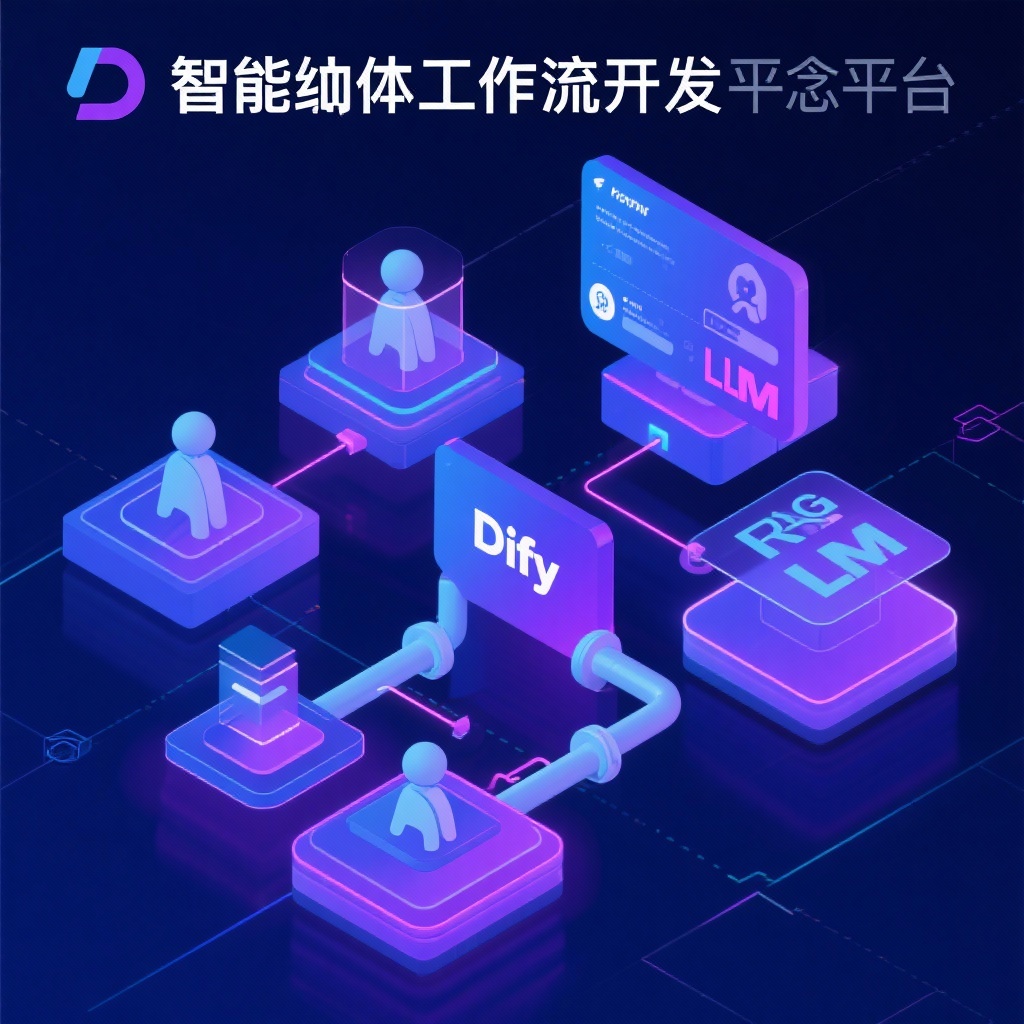
Dify: An Open-Source Platform for Turning LLM Ideas into Production-Ready Applications
If you've tried building LLM applications, you know the frustration: starting with a prototype using LangChain or LlamaIndex is easy, but moving to production requires cobbling together RAG pipelines, model management, user authentication, and monitoring tools. This is where Dify comes in - an open-source platform that integrates all these components into a unified development environment.
What is Dify Solving?
The core problem Dify addresses is the gap between LLM application prototypes and production deployment. Traditionally, developers face several challenges:
- Disjointed tools: Using separate frameworks for RAG, agent workflows, and model management
- Complex deployment: Configuring databases, APIs, and infrastructure
- Limited observability: Lack of monitoring for LLM performance and user interactions
- Collaboration barriers: Difficulty for non-technical teammates to contribute to prompt engineering
With 112k+ stars on GitHub and active development (consistent commits and issue resolutions), Dify has clearly struck a chord with the developer community.
Key Features Worth Attention
1. Visual Workflow Editor
The workflow editor is Dify's standout feature. It allows you to design complex AI interactions through a drag-and-drop interface without writing extensive code. You can chain together prompt nodes, conditional logic, tool calls, and data processing steps visually. This significantly lowers the barrier for implementing multi-step LLM applications.
2. RAG Pipeline Integration
Dify provides out-of-the-box support for Retrieval-Augmented Generation. You can easily connect various data sources (PDFs, PPTs, databases), configure chunking strategies, and select embedding models. The platform handles vector storage management, making it simple to build knowledge-grounded LLM applications.
3. Comprehensive Model Support
Unlike some specialized tools, Dify supports a wide range of models:
- Proprietary models: GPT-4, Claude, PaLM
- Open-source models: Llama 3, Mistral, Qwen
- Self-hosted options: Through OpenAI-compatible APIs
This flexibility lets you choose the right model for your use case and budget without platform lock-in.
4. LLMOps Capabilities
Going beyond development, Dify includes observability features critical for production:
- Request logs and performance metrics
- User interaction analytics
- Annotation tools for continuous improvement
- Model version management
Technical Implementation Highlights
Dify's architecture deserves attention for developers considering deployment:
- Microservices design: Separates core functionalities (API service, worker service, web frontend) for scalability
- Frontend-backend separation: React-based frontend with TypeScript, RESTful API backend
- Containerization: Docker Compose for easy deployment, with Kubernetes options for production
- Modular storage: Supports multiple vector databases (PostgreSQL with pgvector, Pinecone, Weaviate)
The project's technical choices prioritize both ease of initial setup and scalability for larger deployments.
Practical Use Cases
In practice, I've seen Dify work well for:
- Enterprise knowledge assistants: Connecting internal documents to answer employee questions
- Intelligent customer service: Building chatbots with access to product documentation
- Content creation tools: Automating multi-step content generation workflows
- Developer productivity: Creating custom code assistants with team-specific knowledge
The sweet spot seems to be mid-sized applications that need production polish without the overhead of building a custom platform.
Balanced Evaluation
Advantages
- Integration capability: Combines workflow, RAG, and LLMOps in one platform
- Ease of use: Visual interface reduces coding for common patterns
- Openness: Self-hosting option addresses data privacy concerns
- Active community: Rapid issue resolution and regular feature updates
Limitations
- Resource requirements: Minimum 2-core CPU and 4GB RAM may be restrictive for some edge deployments
- Learning curve: While simpler than building from scratch, mastering all features takes time
- Enterprise features: Some advanced capabilities require paid plans
From my experience deploying Dify, the sweet spot is teams with moderate technical expertise wanting to move beyond prototypes but not ready to invest in custom infrastructure. For simple chatbots, it might be overkill, but for anything involving workflows or knowledge grounding, it saves significant development time.
When to Consider Using Dify
Dify is particularly valuable when:
- You need to go from prototype to production quickly
- Your LLM application requires multiple components (RAG + agent capabilities)
- Data privacy concerns necessitate self-hosting
- You want non-technical team members to contribute to prompt engineering
- Long-term maintenance and improvement of the application are planned
For weekend projects or simple demos, lighter tools might suffice. But for applications that need to evolve and scale, Dify provides a solid foundation.
Getting Started
If Dify aligns with your needs, getting started is straightforward with Docker:
bash
git clone https://github.com/langgenius/dify.git
cd dify/docker
cp .env.example .env
docker compose up -d
After initialization, you can access the web interface at http://localhost/install to start building your first application.
In the rapidly evolving LLM tool landscape, Dify stands out by focusing on the end-to-end application lifecycle rather than a single component. Its balance of usability and production readiness makes it worth considering for teams serious about deploying LLM applications beyond the prototype stage. ⚡