Testing Wurst7: Minecraft Cheat Client v7 Java Upgrade - Anti-Detection Strength
Wurst7: Minecraft cheat client v7 tested. Java core upgrade enhances anti-detection. Open-source Fabric mod with 8-year iteration, 1156 GitHub stars, 454 forks. Requires legitimate Minecraft Java Edition; easy installation forms complete mod ecosystem.
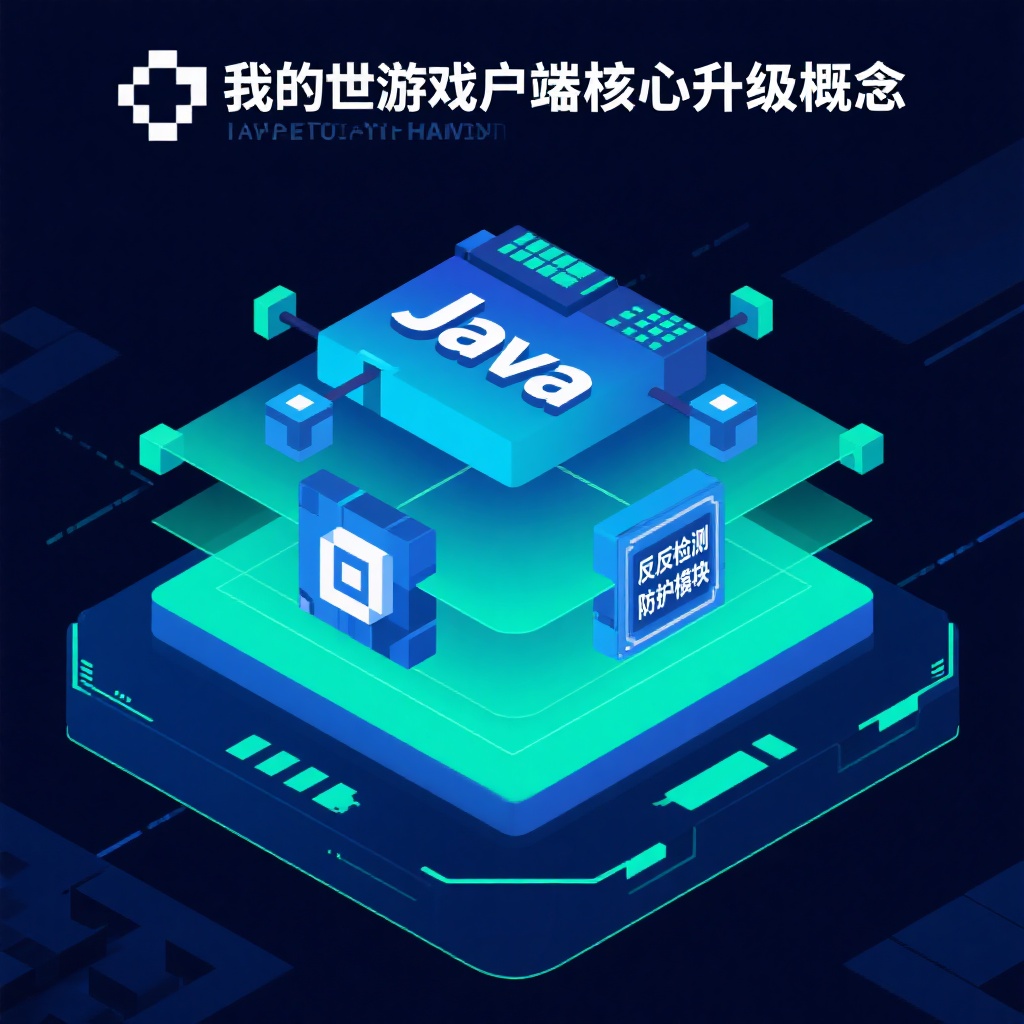
When "Cheating" Meets Open Source: The Technical Secrets Behind Wurst7's Minecraft Mod 🎮
In Minecraft's blocky world, some players enjoy the原始乐趣 of mining their first piece of wood with their bare hands, while others pursue pixel-perfect operational excellence. On the fringes of this ecosystem exists a special category of mods - cheat clients. Despite the controversy surrounding it, Wurst7 stands out as a prominent example with 8 years of continuous development, 1,156 GitHub stars, and 454 forks. These metrics inevitably spark curiosity: what technical story lies behind this "gray area" project?
From "Cheat Tool" to "Open Source Project": An Identity Transformation
Opening Wurst7's GitHub repository, the first things that catch the eye aren't flashy feature promotions but detailed development documentation and clear license statements. Starting in 2019, this project has evolved into a fully structured Fabric mod ecosystem. Interestingly, the project README begins with a郑重声明: "You need to own a legitimate copy of Minecraft Java Edition to use Wurst. We are a cheat client, not a pirated client." This微妙 respect for intellectual property adds a contradictory technical seriousness to this controversial project.
As a Fabric-based mod, Wurst7's installation process is remarkably straightforward: Fabric installer + mod folder copy. This design itself demonstrates a deep understanding of the Minecraft mod ecosystem. The development team clearly understands that even for a "cheat tool," user experience remains a core competitive advantage.
Modular Architecture: "Lego Blocks" of Cheat Features 🧩
Delving into the code, Wurst7's most admirable aspect is its modular design philosophy. By breaking down dozens of cheat features (referred to as "hacks" in the project) into independent components, this architectural choice offers dual advantages:
Feature Decoupling and Extension Convenience
Each cheat feature exists as an independent module with its own activation logic, rendering processing, and configuration options. This design makes adding new features as simple as "connecting Lego blocks" - developers only need to focus on implementing a single feature without worrying about affecting the entire system. Examining the src/main/java/net/wurstclient/hacks directory reveals clear class definitions and lifecycle management for each feature, from Flight to X-Ray.
Clever Implementation of Configuration System
Wurst7's configuration system takes effect in real-time without requiring a game restart. Through a custom Setting class hierarchy, developers can create a unified configuration interface for different types of feature parameters (booleans, value ranges, enum options). This design not only improves development efficiency but also provides users with a consistent operational experience.
java
// Simplified feature module example
public class FlightHack extends Hack {
    private final EnumSetting<FlightMode> mode = new EnumSetting<>("Mode",
        "飞行模式", FlightMode.CREATIVE);
    private final SliderSetting speed = new SliderSetting("Speed",
        "飞行速度", 1, 0.1, 5, 0.1);

    @Override
    public void onEnable() {
        // Activation logic
    }

    @Override
    public void onDisable() {
        // Cleanup when disabled
    }

    @Override
    public void onUpdate() {
        // Game frame update processing
        if(mode.getSelected() == FlightMode.CREATIVE) {
            // Creative mode flight logic
        }
    }
}
This design pattern evokes the plugin architecture of professional IDEs - keeping the core lean while extending functionality through plugins. For a cheat client that needs frequent updates to keep up with Minecraft version changes, this architecture significantly reduces maintenance costs.
Countermeasures and Counter-Countermeasures: A Technical "Cat and Mouse Game" 🐱🐭
The battle between Minecraft servers and cheat clients is essentially an ongoing technical arms race. Wurst7's developers clearly understand this well, as their code is filled with clever techniques to counter anti-cheat systems:
Dynamic Feature Hiding
To avoid detection by server-side anti-cheat systems, Wurst7 implements various feature concealment techniques. For example, dynamically modifying class names and method signatures of cheat features to avoid static signature recognition; applying smoothing to critical cheat behaviors (like abnormal movement) to simulate human operation patterns.
Fine-grained Control at the Protocol Level
At the network communication level, Wurst7 deeply customizes the Minecraft protocol. By modifying the PacketSender implementation, the client can precisely control data packets sent to the server, avoiding triggering anomaly detection thresholds. This level of protocol control requires deep understanding of Minecraft's network layer.
Anti-debugging and Code Protection
Despite being released as an open-source project, Wurst7 still includes basic anti-debugging mechanisms. This seemingly contradictory choice actually reflects the project's dual positioning: being part of the open-source community while maintaining competitiveness in the battle against anti-cheat systems.
Open Source Governance: "Transparent Cheating" Under GPLv3 🔍
Wurst7 uses the GPLv3 license, a rare choice in the cheat client领域. Typically, such projects adopt closed-source models to protect core technologies, but the Wurst7 team has taken the opposite approach:
The Philosophy of Mandatory Open Source
The "copyleft" nature of GPLv3 requires any derivative work based on Wurst7 to be open-sourced under the same license. This choice may stem from the development team's commitment to open-source principles or serve as a strategy - attracting community contributors while mitigating legal risks through code transparency.
Strict Contribution Process
The project README clearly states that "you must contact the author before submitting a PR." This seemingly "not very open-source" requirement actually serves to maintain code quality and project direction. Maintaining project control in a controversial领域 is perhaps the key reason Wurst7 has been able to iterate continuously for 8 years.
Multilingual Support and Community Building
Wurst7's translation system design shows ingenuity: feature names are强制英文 to ensure command and shortcut consistency, while descriptive text supports multiple languages. This compromise ensures operational uniformity for global users while lowering localization barriers. Examining the src/main/resources/assets/wurst/translations directory reveals support for languages from Chinese to Russian, backed by an active network of community translation contributors.
Technical Reflection: When "Gray Technology" Meets Open Source Spirit
The existence of Wurst7 itself poses a technical ethics question. As a technical work, its architectural design, code quality, and community operation are commendable; but as a cheating tool, it确实 undermines game fairness. This contradiction invites reflection:
Technology Neutrality and Usage Responsibility
Wurst7's code itself is neither good nor evil, just as a knife can cut vegetables or harm people. The project team's emphasis in the README on "needing legitimate Minecraft" is, to some extent, an attempt to distance themselves from piracy and find a moral foothold in the gray area.
The Boundaries of Open Source Models
Applying GPLv3 to a cheat client challenges or expands open-source philosophy? Wurst7 demonstrates that even controversial projects can benefit from open-source models - community contributions, transparent development, and code review all improve project stability and security.
Technical Insights for Game Ecosystems
Putting moral争议 aside, Wurst7's technical implementation offers valuable lessons for Minecraft mod development: modular architecture, configuration system design, network protocol handling - these technical points can all be applied to legitimate mod development. In fact, many Minecraft辅助工具 (like map viewers and building assistants) have borrowed similar techniques.
Conclusion: A Technical Mirror in the Block World
Wurst7 acts like a mirror, reflecting the complex landscape of gaming technology ecosystems. It reminds us that technical capability and moral responsibility need balanced development. For developers, its modular architecture and open-source governance经验 are worth studying; for ordinary players, it serves as a reminder that fair competition is the true essence of gaming.
Under Minecraft's pixelated sky, Wurst7's code continues to run, but the technical discussions and ethical reflections surrounding it may be more valuable than the project itself. After all, true technological progress isn't just about what we can do, but about how we use it responsibly.
Note: This article is for technical analysis only and does not encourage any form of游戏作弊行为. Please always abide by game rules and community norms to共同维护 a healthy gaming environment.